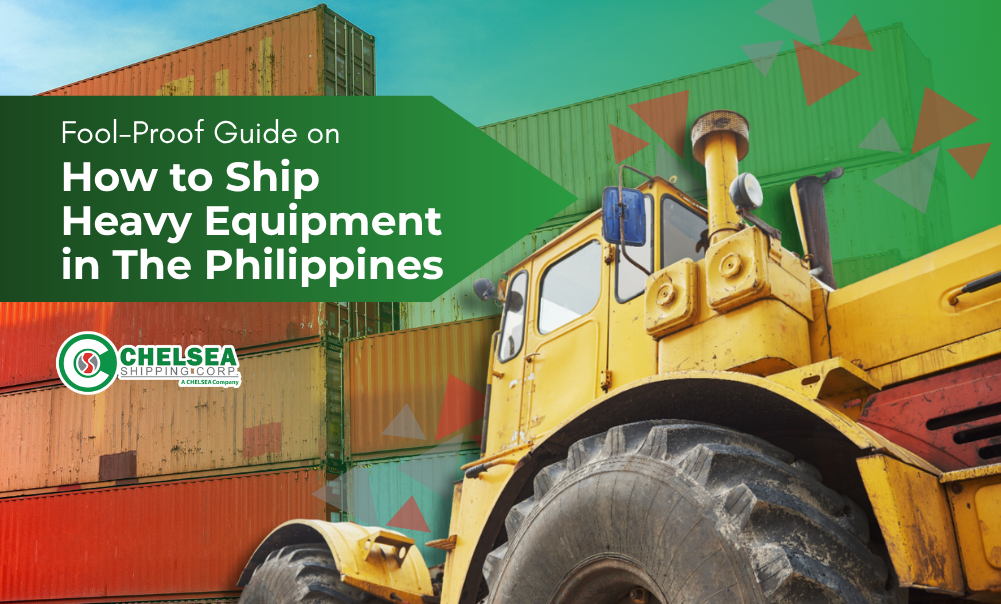
Fool-Proof Guide on How to Ship Heavy Equipment in The Philippines
- blog
- May 18, 2026
The logistics of industrial equipment are a part of construction and development companies’ biggest dilemmas. Projects take place in diverse locations scattered all over the Philippines. This makes it challenging for them to move equipment between islands and various terrains. Fortunately, heavy equipment shipping companies now make inter-island shipping easier. Services like cargo container shipping, vessel chartering, and out-of-gauge (OOG) cargo shipping can be tailored to carry heavy equipment.
Businesses can benefit from a broad range of heavy equipment shipping options. Find out how to ship heavy equipment and keep your operations one step ahead.
A Businessman’s Guide to Heavy Equipment Shipping in the Philippines
Types of Heavy Equipment
- Construction
The construction industry engages in many heavy equipment shipping activities. This involves machinery like cranes, dump trucks, bulldozers, boring machines, and excavators.
- Transportation
Land transportation uses a variety of wheeled heavy equipment, such as trucks and trailers. These can contain general dry, wheeled, or project cargo.
- Material Handling
Logistics material handling requires the use of forklifts, conveyor belts, packing, and palletizing machinery.
- Agriculture and Farming
Tractors, tillers, ploughs, field vehicles, and harvesters can be transported by sea shipping and directly rolled off the vessel.
3 Heavy Equipment Shipping Methods
- Roll on/Roll off Shipping (RoRo)
Heavy equipment shipping companies in the Philippines typically offer RoRo shipping as their primary means of transporting wheeled machinery. These cargoes can be loaded onto the car hold of a RoRo vessel along with other vehicles. Upon reaching the destination port, this can then be ‘rolled off’ the hold. From there, heavy equipment can either be driven or brought onto a trailer to reach its final destination.
- Container Shipping
Standard shipping containers can also be used for heavy equipment. If your industrial machinery can fit inside a standard 20 ft or 40 ft container, it can be secured with the appropriate lashing and strapping methods. This way, you can prevent different units from shifting around and incurring damage. Out-of-gauge (OOG) or project cargo will require open containers or flat racks.
Although this shipping method may entail higher expenses, it is a practical solution for businesses or individuals that require multiple shipments on the same voyage.
- Lift on/Lift off Shipping (LoLo)
Jib and gantry cranes are designed to lift large, bulky machinery and standard containers onto ship holds. It is one of the economical ways to ship heavy equipment, as cranes can manipulate cargo to fit efficiently within the hold. This can be done as long as a port or ship has the proper facilities to perform lifting.
Information Required for Heavy Equipment Shipping
When transporting heavy equipment, shipping companies may require specific information about your machinery. This will be used for handling, tracking, and ensuring that it is delivered safely and securely. Before booking a shipment, prepare the following information:
- Accurate weight and dimensions
- Equipment name and model
- Disassembly details (if applicable, especially for project cargo)
- Handling requirements or specialized packaging
5 Tips on How to Ship Heavy Equipment Efficiently
- Conduct route planning
It is necessary to assess the chosen route along which your heavy equipment will be shipped. For ease and convenience, shipping companies may already have specific routes and predetermined schedules. This is also necessary for businesses to find out the nearest port of call to their cargo destination.
- Estimate the costs
Heavy equipment shipping rates vary depending on each unit’s dimensions, weight, and handling method. Costs are also affected by insurance and permits you are required to present before shipment. Long-haul shipments, such as Manila to Mindanao routes, may entail higher transport fees and possibly extra precautions during lashing and securing.
- Look for the right shipping container or specialized carrier
Depending on the type, dimensions, and weight of your heavy equipment, you must identify which shipping method is best for you. Your chosen shipping partner must have the ability to provide various resources, such as:
- Standard shipping containers
- Project cargo containers or trailers
- RoRo vessels
- Lashing, strapping, and securing equipment
- Stern and internal ramps (for RoRo vessels)
- Practice proper loading and securing of machinery
Just like vehicles, heavy machinery must be loaded and secured to prevent shifting around in transit. For enhanced safety, extra fixtures, such as lashes, straps, or braces, must be added to the unit. Shipping companies in the Philippines deploy knowledgeable and highly-skilled professionals to ensure a secure, controlled environment for shipping heavy equipment.
- Ensure regulatory compliance
Specialized equipment will require the right insurance, proper documentation, and permits. It is necessary to comply with regulatory requirements to avoid costly delays in shipment. This step is also crucial to ensure legal protection for your business. A reliable shipping company is equipped with the expertise to procure accurate documents needed for voyages.
Heavy equipment shipping is essential for various industries. It helps them overcome barriers to industrial and agricultural development, as well as manage the unique challenges of transporting oversized, bulky items.
ALSO READ: 10 Reasons Philippine Shipping Companies Impact the Economy
Nothing is impossible when you move heavy equipment with Trans-Asia Shipping Lines, Inc. We provide safe and secure logistics solutions for demanding transportation jobs. Our cargo and freighter vessels are highly capable of carrying various construction equipment, agricultural tools, and industrial machinery.
Get in touch with us today and let us know how we can help you.