5 Essential Facts About Dry Docking in the Philippines
- blog
- September 30, 2026
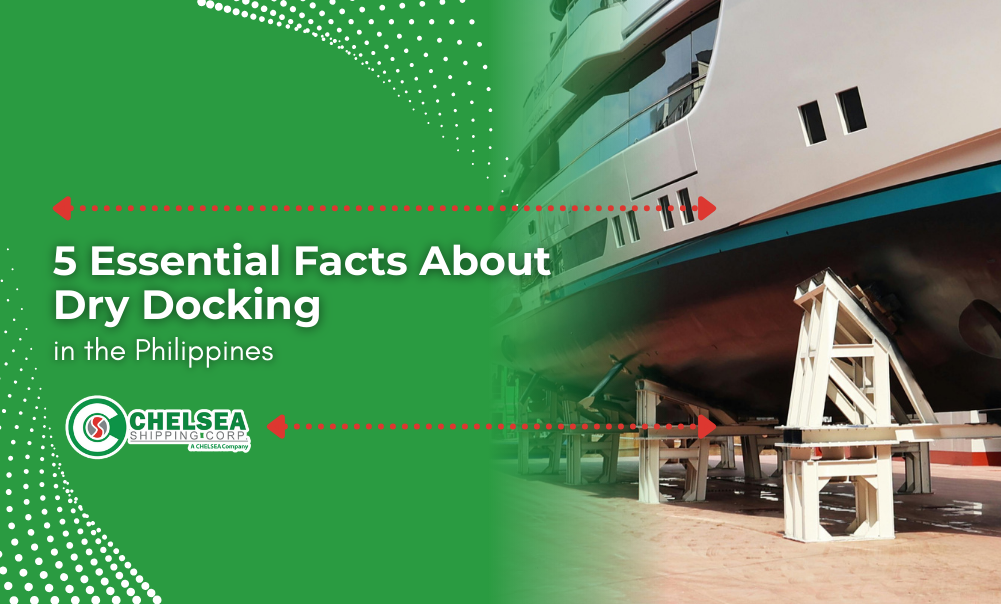
Whether you own a merchant or small private vessel, your ship must be brought to dry dock in the Philippines. Dry docks provide a secure location for facilitating ship repair and maintenance works. These specialized services make it possible to reach challenging areas that are typically submerged in water. It strengthens a vessel’s integrity, combats structural problems, and overhauls its internal systems.
Having foundational knowledge helps you choose a reliable dry dock in the Philippines. Get to know the essential aspects of this maintenance strategy so you can optimize your ship performance.
5 Facts About Dry Dock in the Philippines That Ship Owners Must Know
- Dry docking is an essential part of ship management.
Dry docking is the regular maintenance and repair of marine ships. It focuses on the structural integrity of a vessel, particularly in spots that are typically submerged in water. To adhere to international standards, registered vessels must be drydocked twice every five years. If neglected can cause potential health and safety hazards to crew and cargo. By scrutinizing these parts at a dry dock in the Philippines, ship owners can be proactive when it comes to the condition of their vessel.
- Dry docking involves a meticulous process.
When a ship is due for dry docking, the crew man the vessel and hauls it onto the dock in tandem with shipyard personnel. Below is a brief glimpse of the process of dry dock in the Philippines:
Pre-docking
- Keel blocks are arranged at the shipyard. These will hold the vessel up.
- Tug boats assist or maneuver the vessel into the dry dock.
Docking
- Water in the dry dock is drained and the ship will sit upright on the keel blocks.
- The ship’s anchor chains are laid out for maintenance, cleaning, and repairs.
- Hull painting involves three steps:
- Washing – High-pressure jets are used to wash away organic growth and chlorides from the surface of a ship.
- Blasting – Rust and damaged paint is removed through blasting. It is completely removed to paint over the bare stainless steel.
- Painting – Shipyard crew paint the whole vessel. A fresh coat of marine-grade paint protects the material’s integrity, prevents corrosion, and deters organic growth while the ship is submerged in water.
- The sea chest and valves are opened, cleaned, and painted. This is the area where sea water passes through to get to the ship’s cooling system.
- Ship maintenance teams go through each part of the vessel to perform various repairs and cleaning.
Post-Docking
- The dock is flooded once again and a tug boat tows the ship back out into the sea.
- Finally, ships are taken out for test runs to check its operational functionality.
- A number of shipyards can facilitate dry dock in the Philippines.
Out of the 123 shipyards in the country, majority are categorized as Class C, meaning they are capable of shipbuilding and repair to a max length of 80 meters. Their services include dry docking using varied types of dry docks. Meanwhile, there are 19 Class B shipyards, whose max length is around 129 meters. Finally, sophisticated Class A facilities can repair from a minimum length of 130 meters.
- The Philippines has several types of dry docks.
Most shipyards have diverse kinds of dry dock in the Philippines, most of which can be found in facilities in Batangas, Cebu, Davao, General Santos, Cavite, Navotas, and more.
U-shaped dry docks that can be moved around several locations offshore. They can submerge underwater, lift vessels out, and perform maintenance. Ideal for remote areas that lack shipyard facilities.
- Graving Dry Docks
Land-based ship repairs are done in graving dry docks, which are dug out the shore and fitted with steel, concrete, and a floodgate. It is best suited for large merchant vessels.
- Slipway or Marine Railway Dry Docks
A dry dock in the Philippines that extends into the water like a ramp. It is built with tracks on which a vessel is hauled for maintenance and repairs. This is the best choice for small passenger or fishing vessels.
- Small passenger and fishing vessels rely on slipway dry docks.
A 2025 study by the OECD revealed that 70% of shipyards in the Philippines rely on slipways for building and repairing small vessels. Passenger and fishing vessels suffer extreme wear and tear especially during rough sea conditions. On the other hand, large commercial shipyards like those in Batangas, Subic, Cebu, and Davao continue their modernization efforts, improving facilities to cater to more domestic vessels.
Besides being a mandatory aspect of ship maintenance, dry docking in the Philippines is what keeps domestic merchant vessels fit for regular operations. It also serves as a layer of security for the crew, transported cargo, and the environment. Think of it as preventive maintenance for your vessel, fixing minor issues before they get worse.
ALSO READ: 7 Must-Know Facts About Tug Boat and Barge Operations
Does your ship need dry docking facilities? Chelsea Shipping Corp. operates two floating dry docks in the Philippines, Chelsea Agility and Chelsea Exuberance. Our robust ship management services include an extensive array of ship solutions for all types of vessels. We also offer ship chartering, crewing, cargo handling, and tugs services for your varied business needs. Interested in partnering with us? Drop us a message here!