6 Key Considerations for Tug and Barge Crewing
- blog
- November 4, 2026
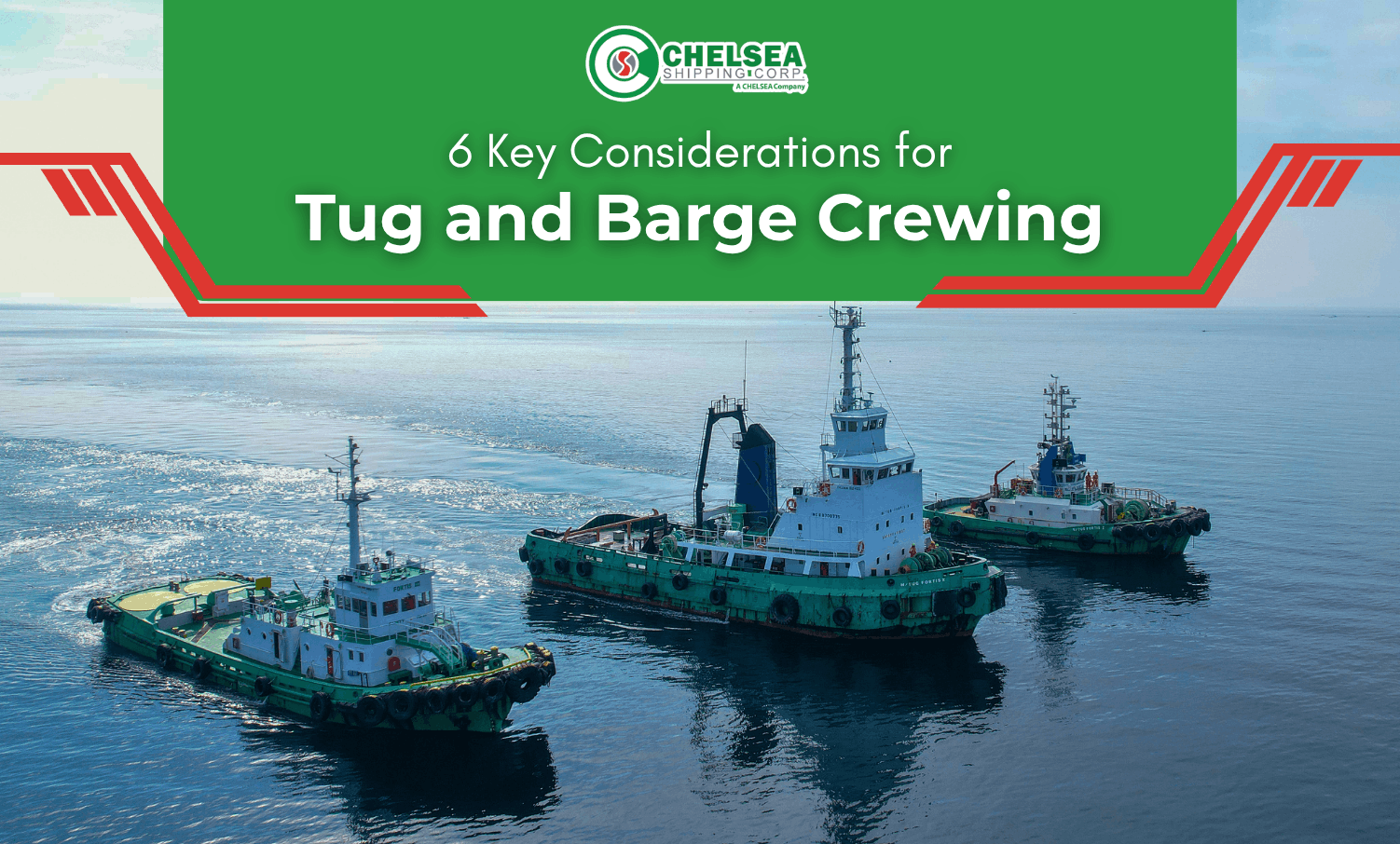
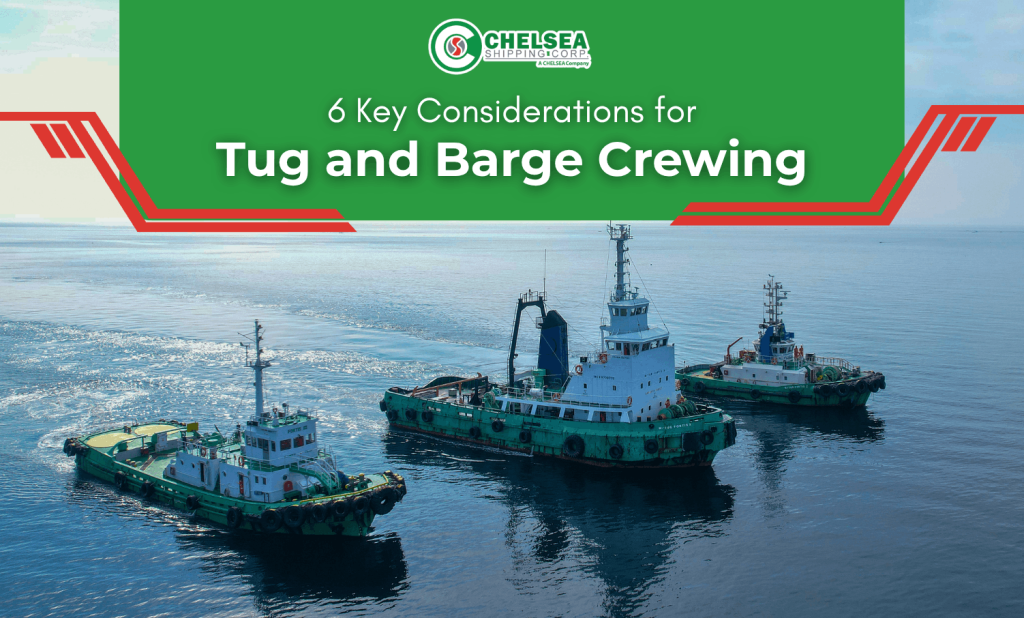
Tugboats can be found in harbors alongside cargo, RoRo, and tanker ships. Tugboats tow or push barges loaded with loose, containerized, and packaged cargo in ports and on inland waterways. Efficient barge crewing is crucial to maintain its essential role in maritime transport. In many cases, these barges are also used to deliver crew and materials to offshore sites. It is considered a more affordable and versatile option for companies and projects that require frequent transportation.
Barges typically cannot function without a skilled tugboat crew, who can maneuver, monitor, and control every critical aspect of the operation. If you are looking for maritime crewing services for your tug and barge operations, here are the factors you should consider.
6 Aspects of Tug and Barge Crewing You Must Consider
- Tug and Barge Configuration
If you own a tug or barge, make sure that it is properly configured for your cargo and voyage requirements. This information is also essential when consulting a maritime crewing service, so your vessel can be operated by skilled personnel. For instance, barges used in the construction industry must be capable of accommodating industrial machinery, raw material stockpiles, and components without exceeding dimensional and weight limits.
Consider also the vessel size, age, horsepower, and bollard pull, capacities, propulsion system, specialized features (firefighting and rescue equipment), and limitations.
- Specialized Skillsets
Look for captains and mates who have proven experience in cargo and load management, line handling, hydrodynamics, navigation, and the associated challenges. Tug boats are highly specialized for towing and assistance; however, articulated and conventional tugs can entail more complex maneuvering. Documented experience in specialized barge crewing is crucial to determining whether someone is fit to operate a tug and barge.
- Understanding of z-drive, ASD, mechanical, or tractor propulsion systems for tugs
- Proficiency in reading navigational systems (radar, GPS, AIS, ECDIS)
- Precise control for steering and maneuvering in narrow, congested ports
- Efficient and safe line handling
- Attention to detail and vigilance to maintain barge security
- Routine maintenance of deck and cargo
- Occupational Safety Training
Shipping companies in the Philippines emphasize the importance of occupational safety and hazard training for maritime crewing. A strict safety culture encourages open communication, awareness, discipline, and risk management among tug and barge crew members. It also helps you stay compliant with maritime regulations. Onboard crew must also be skilled in using safety and emergency gear that specialized tug boats come with.
- Familiarity with Inland and Coastal Waterways
Because tugboats mainly operate in narrow waterways, the crew needs to have a deep, localized geographical understanding of these features. This helps them address challenges like precision maneuvering, accidents, structural hazards, and maritime traffic. It also enables them to map the most efficient route to take, as well as make practical on-the-spot decisions.
- Cargo Handling
Tug and barge operations deal with a wide variety of cargo, from dry and liquid bulk to oversized machinery and construction materials, to soil and sediment. Some barges even transport hazardous goods like chemicals and refined petroleum products. Consult with a barge crewing company that provides clear-cut cargo handling training (lashing, weight distribution, structural support) to guarantee proper movement of goods.
- Certification
Every local tugboat and barge crew must hold valid statutory credentials according to the Maritime Industry Authority (MARINA). This can include professional licenses, Certificates of Competency, and endorsement certificates. Industry-specific certifications and permits may also be required for barges that carry oil and petroleum products, so it is necessary to communicate closely with your chosen shipping lines in the Philippines.
Sufficient maritime crewing is critical to successful tug and barge operations, whether it is used for transporting industrial materials, bulk cargo, or containers. No matter your objective, remember that selecting a reliable logistics partner helps you attain positive outcomes and long-term success.
ALSO READ: Key Aspects of Marine Fleet Management that Every Ship Owner Must Know
Worry less about your maritime crewing needs. Chelsea Shipping is the Philippines’ trusted shipping and logistics company, licensed to recruit, train, and deploy professional seafaring crew. Our subsidiary, Chelsea Marine Manpower Resources, Inc., is committed to providing quality full or partial ship crewing to Filipino vessels. Defined by global standards and competencies, we ensure each seafarer is thoroughly equipped with the skillset, training, and guidance to facilitate safe voyages across the country.
Interested? Send us a message to let us know how we can help you.