A Detailed Look into Cargo Vessel Ships
- blog
- April 6, 2026
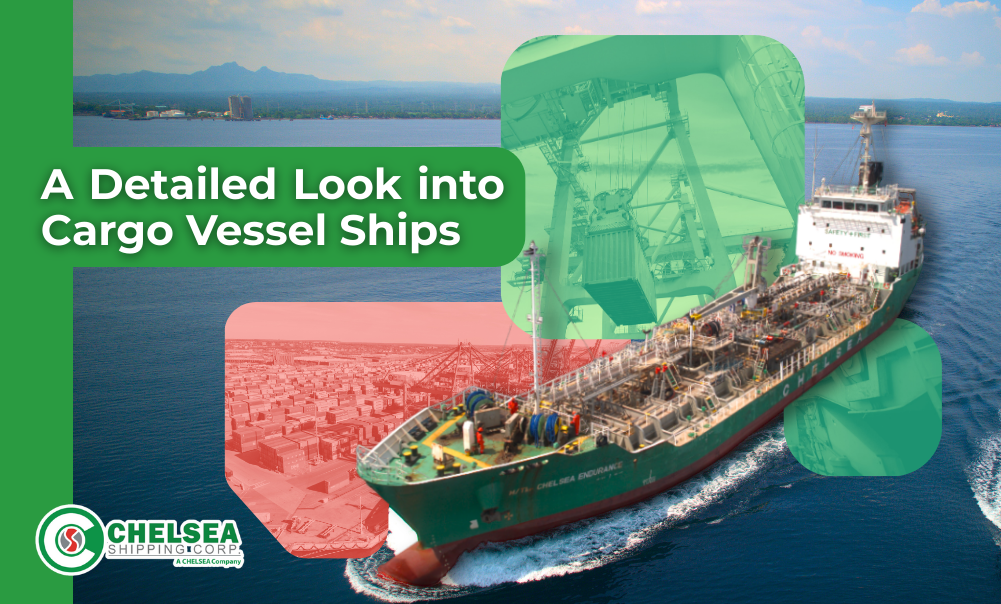
A cargo vessel can come in varying shapes, sizes, and functions. This versatile ship enables the conduct of maritime trade, both domestically and internationally. It is used to safely transport different commodities across the ocean, connecting suppliers, distributors, and consumers through a complex network.
Although the type of cargo makes cargo vessels distinct from each other, the end goal is to always deliver goods on time and in pristine condition. Discover more about the types, sizes, and benefits of cargo vessels in this helpful guide.
Essential Info You Should Know About the Types of Cargo Vessels
What is a Cargo Vessel?
A cargo vessel is a merchant ship that transports large amounts and sizes of goods from port to port. It is typically classified according to the cargo it carries, such as dry bulk, liquid, or container cargo.
Different types of cargo vessels have unique specifications when it comes to size, structure, features, and materials used to construct them. Specialized cargo vessels often come with technologically-advanced systems that enable them to load, haul, and protect cargo efficiently.
6 Types of Cargo Vessels That Operate in Maritime Trade
1. Container Ship
A container ship is a type of cargo vessel that carries 20ft or 40ft shipping containers. It is designed for loading, unloading, and stacking containers for easy transport across different ports. Some container ships have their own deck cranes while others utilize gantry cranes to lift containers onto the vessel. The unit of measurement for its capacity is in twenty-foot equivalent units (TEUs).
Common Container Cargo Ship Sizes
Asia facilitates more than half of global container trade at 63%, and because of this, container cargo vessels of varying sizes operate all over domestic and global ship lanes. These are the most common container vessel sizes.
- Feeder (<500 up to 1,000 TEU)
Medium-sized types of container ships that operate between smaller and major ports. Enables the shipment of goods from smaller ports to be transported to key domestic hubs access international markets
- Panamax (up to 5,000 TEU)
Larger ships built according to the limits of the Panama Canal. Mainly used in international trade and enabled the shipment of larger volumes of goods.
- Very Large Containership / VLCS (11,000-15,000 TEU)
Cargo vessels that exceed the size of the Panama Canal, can carry an extremely large number of containers and are used to cross major trade channels for maximum efficiency.
- Neo-Panamax (up to 14,000 TEU)
Can easily traverse the expanded Panama Canal. Defined the standard size of newer vessels that can travel Asia, Europe, as well as the Americas.
- Ultra-Large Containership/ ULCS (18,000-21,000 TEU)
Expansion of the Panamax class designed to reach the limits of the Suez Canal, effectively solidifying its efficiency in international maritime transport.
2. General Cargo Vessel
General cargo ships are versatile choices for transporting all kinds of commodities. It carries container, breakbulk cargo, and loosely packed bulk cargo. This is one of the types of container ships that can accommodate a mix of different cargo. It is possible to combine reefer containers, regular containers, packaged goods, and industrial equipment in a single general cargo vessel.
3. Reefer Vessel
A refrigerated or reefer ship is a specialized cargo vessel designed to transport temperature-controlled commodities. It is necessary to maintain the freshness of perishable goods such as dairy, fruits, vegetables, and meat until it reaches its destination. This makes refrigerated cargo vessels critical for global trade activities.
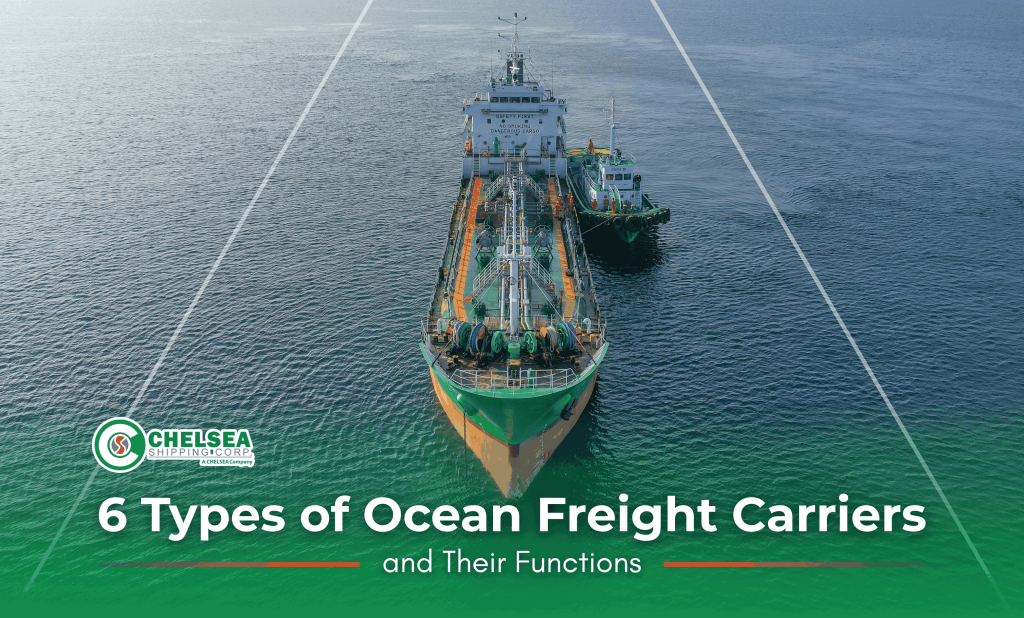
4. Tanker
Bulk liquid cargo is transported using a tanker, with various sizes designed to hold large quantities of liquid. Cargo is pumped into the hold and secured through a complex safety system to ensure its safety throughout the journey. Tankers are also classified according to vessel size and cargo type, such as:
- Crude oil tanker
Specifically carries unrefined crude oil and petroleum products used in energy industries. Characterized by a flat deck designed for holding an intricate piping system.
- Chemical tanker
Accommodates a diverse range of liquid chemicals like methanol, palm or vegetable oil, sulfuric acid, and phosphoric acid. Engineered with stringent safety requirements, coatings, and temperature controls.
- Liquefied Natural Gas (LNG) and Liquefied Petroleum Gas (LPG) carrier
Transports corrosive, flammable, or toxic gas in individual, low-temperature tanks. Equipped with high insulation, membrane tanks and advanced safety systems.
- Product tanker
Cargo vessel that carries refined petroleum products like gasoline and diesel for commercial use. Vessel size is usually smaller than crude oil tankers.
5. RoRo Ship
A Roll-on/Roll-off or RoRo ship is a type of cargo vessel that can transport wheeled cargo, hence its name. Vehicles and industrial machinery can be rolled on or off the vessel, and in some cases, lifted on and off (LoLo ship) using on-board cranes. It carries cars, trucks, buses, and heavy equipment, making it essential for domestic and international transport of automotives and general goods. Domestic RoRo vessels also transport passengers across short or long-distance sea travel.
6. Dry Bulk Carrier
Bulk carriers or bulk cargo vessels carry dry, non-containerized cargo. These are usually raw materials like minerals, iron ore, coal, or grains. Most bulk carriers utilize on-board cranes or conveyor belts to load bulk products into the cargo hold. It comes in varying sizes depending on its trade route and destination ports. From largest to smallest in deadweight tonnes (DWT), some of the bulk carrier sizes are:
- Very Large Ore Carrier / VLOC (250,000 DWT)
- Capesize (199,999 DWT)
- Panamax (78,999 DWT)
- Handymax (49,999 DWT)
- Small Handy (24,999 DWT)
Benefits of Using a Cargo Vessel Ship for Your Business
Transport large volumes of products economically
Businesses that need to ship a large number of commodities can save on costs through sea freight shipping. A single high-capacity cargo ship can do wonders for transporting raw materials and finished products, which is crucial for manufacturers and distributors.
Cargo shipping services such as LCL and FCL shipping give business owners the option to consolidate goods and share costs with other businesses. This makes shipping through various types of container ships an economical option.
Access to various types of cargo vessels
Versatility is one of the fundamental benefits of using the diverse types of cargo vessels. Businesses may require a specific type of vessel according to its products, such as petroleum refineries that need tankers, dairy producers that require reefer vessels, and so on. Partnering with a reliable shipping company makes a wide range of cargo options more accessible to commercial users.
Enhanced safety and security during transit
In the digital age, a modern cargo vessel is most likely integrated with the latest tech-based security and tracking systems. This further prevents the chances of damage or theft. Advanced handling equipment and techniques are also practiced in major ports and transit hubs, ensuring the safety of products throughout the supply chain process.
Expanded market reach
Sea cargo shipping connects an impressive amount of B2B and B2C operations across the country and all over the world. Transporting via cargo vessel has drawn ecommerce, manufacturers, retailers, and various consumers even closer together. This expansive network also enables businesses to reach more domestic and global markets.
The wide range and types of cargo vessels make it possible for key trade players to facilitate efficient processes in the supply chain. In the coming years, it is expected that innovative ideas and advanced maritime engineering will continue to introduce fortified cargo vessels that should further enhance the capacity of the standard cargo vessel.
ALSO READ: Essential Facts to Know About Tug Boats
Access a variety of expert maritime services through Chelsea Shipping Corp., home of the Philippines’ biggest registered cargo vessel, M/T Chelsea Providence. Our extensive fleet consists of different cargo vessels ranging from tankers to barges. We also offer ship services such as crewing, ship management, chartering, tug, cargo handling, and more. Send us a message today to learn more.