21 Types of Maritime Jobs in the Philippines that You Must Explore
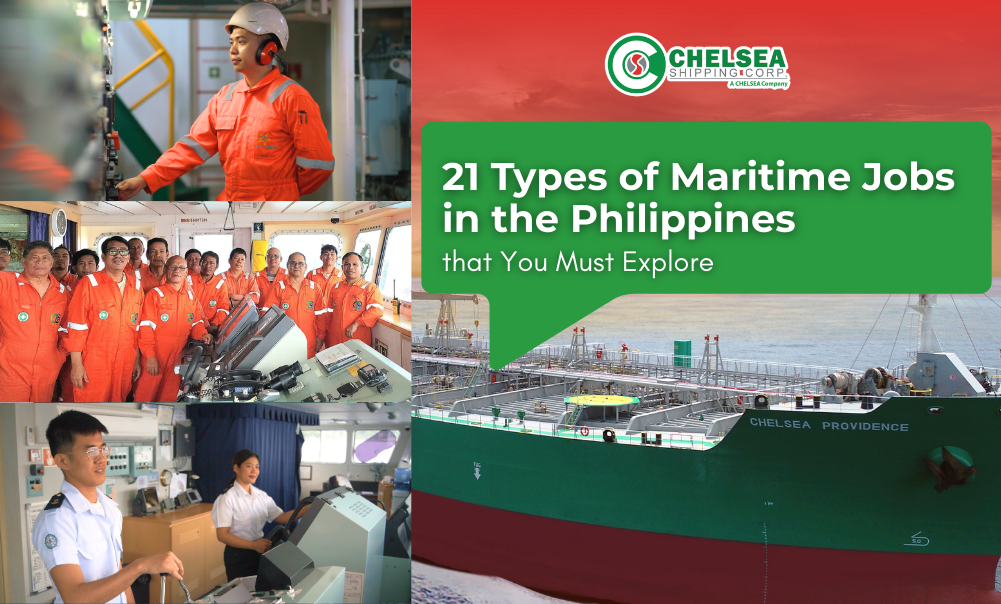
Are you figuring out what types of maritime jobs best suit you? The maritime industry offers a wide range of career opportunities. Cargo ships, ferries, tugboats, and the like actually require diverse technical, navigational, logistics, and other support roles. Entry-level roles like apprentices can progress into more skilled and knowledgeable careers in the future. The Philippines is already known as a top provider of seafarers globally, and in recent years, more training and career sustainability opportunities have emerged within various sub-areas of the maritime industry. If you’re wondering if your knowledge and skills are fit for this sector, look no further. This list combines the most valuable types of maritime jobs in cargo shipping, ferry operations, tugboats, port operations, and ship management. 21 Types of Maritime Jobs to Grow Your Career in the Philippines Deck and Navigation Careers An able seaman (AB) is an experienced, official member of the ship deck. The AB performs critical duties like helmsmanship, deck machine operation, mooring, and watchstanding. This role is usually obtained along with specialized certifications, and after 2 or more years of experience. The second mate provides navigational and voyage planning support to the Chief Officer. They plan safe routes, maintain bridge equipment, and update charts and other publications. In most cases, they are also responsible for medical duties. The first mate or second-in-command directly assists the Ship Master or Captain. They oversee the deck operations, manage the crew, and take charge of navigational, cargo, and safety duties. Piloting is one of the essential maritime careers, especially when navigating narrow, challenging, or congested waterways. They are highly skilled in guiding ships through these channels. Entry-Level Maritime Jobs Apprenticeship is usually where seafarers start building their career. This is a hands-on experience in an actual maritime job and work environment. Most shipping companies in the Philippines open apprenticeship programs to aspiring young professionals, equipping them with the necessary knowledge to succeed in the industry. The deckhand is an entry-level role in the crew, who specifically focuses on general tasks on a ship deck. It involves hands-on assistance with cargo, cleaning, mooring, and maintaining safety onboard the vessel. Engineering and Technical Roles Engineering graduates can enter maritime jobs that involve the operation, repair, and maintenance of the ship’s mechanical and electrical facilities. It is important for a ship’s systems to run smoothly and efficiently according to domestic and international safety standards. The ETO is a senior or chief member of the ship management team. These types of maritime jobs require specialized skills in repairing and maintaining all kinds of automation and electrical systems on board. It involves care for the navigational, fuel, electrical, and power systems. The maintenance of ship engines and other onboard systems is the primary responsibility of the marine mechanic. They ensure that a vessel is performing safely before, during, and after each voyage. Hospitality and Housekeeping Whether a cargo ship or ferry, cooks are essential to keep the crew healthy and well-fed. They are in charge of meal planning, prep, and managing the kitchen staff. They also manage the galley. A purser handles the main administrative and financial tasks on board. Examples include ticketing, ship inventory, documentation, and even crew payroll. They are also the front desk manager. Port-Based and Shore-Based Roles Coordinating all maritime jobs and activities within a harbor is no easy task. The Harbor Master manages the overall regulations, safety, and traffic within a harbor. They are also authorized to enforce various relevant laws. The port captain focuses on the key operations in the port. They liaise between shipping companies and port authorities, coordinate vessel schedules, cargo loading, and other commercial shipping concerns. Port agents assist the port captain with tasks of similar nature, usually performing hands-on management of vessel schedules, documentation, maritime and customs clearances, and ship maintenance. Stevedores or longshoremen are maritime jobs responsible for cargo shipping. They load, unload, and handle cargoes at port. They also operate heavy machinery like gantry cranes and forklifts. Logistics and Cargo Ship Jobs These types of shipping jobs are focused on day-to-day shipping documentation, movement, and coordination of cargo. They are essential roles to shipping companies, particularly for coordinating shipment and maintaining relationships between port links. Ship schedules, movements, and conditions are typically monitored by vessel operations managers. They also engage in high-level route and schedule planning for ports and shipping companies. Specialized Roles Safety experts are necessary for smooth voyages. Maritime Safety Officers perform risk analysis and mitigation, compliance management, and conduct safety training for all crew members and passengers. Tugs are specialized vessels with diverse assistive and salvage functions. Tugboat Captains are highly skilled in navigating, maneuvering, and docking operations along with large vessels. Tug boat maritime jobs require a high level of technical knowledge, particularly with its powerful propulsion systems. A tugboat engineer maintains, repairs, and checks all tugs systems to prevent operational errors. Bunkering encompasses various fuel-related tasks on a ship. These cargo ship jobs are essential for the overall performance of the ship, as bunkering operators manage challenging fuel transfers from barge to vessel. They also implement strict documentation and safety compliance for hazardous material handling. Hardworking professionals can definitely gain worthwhile, insightful experiences when exploring different types of maritime jobs. Whether you come from a logistics, administrative, seafarer, or even hospitality background, the maritime industry welcomes all sorts of individuals who wish to further their land-based or sea-based career. ALSO READ: Fool-Proof Guide on How to Ship Heavy Equipment in The Philippines Where to Apply for Maritime Jobs in the Philippines? If you are looking for a fulfilling maritime career in Manila, Cebu, or Davao, Chelsea Shipping Corp. provides a promising future for aspiring seafarers. We are a maritime shipping company that offers ship management, crewing, vessel chartering, cargo shipping, and tug boats services to diverse clientele. Chelsea Shipping, Chelsea Logistics, and other subsidiaries also periodically open an apprenticeship program that hones the skills of entry-level professionals and on-the-job training. Interested? Contact us here to learn more.